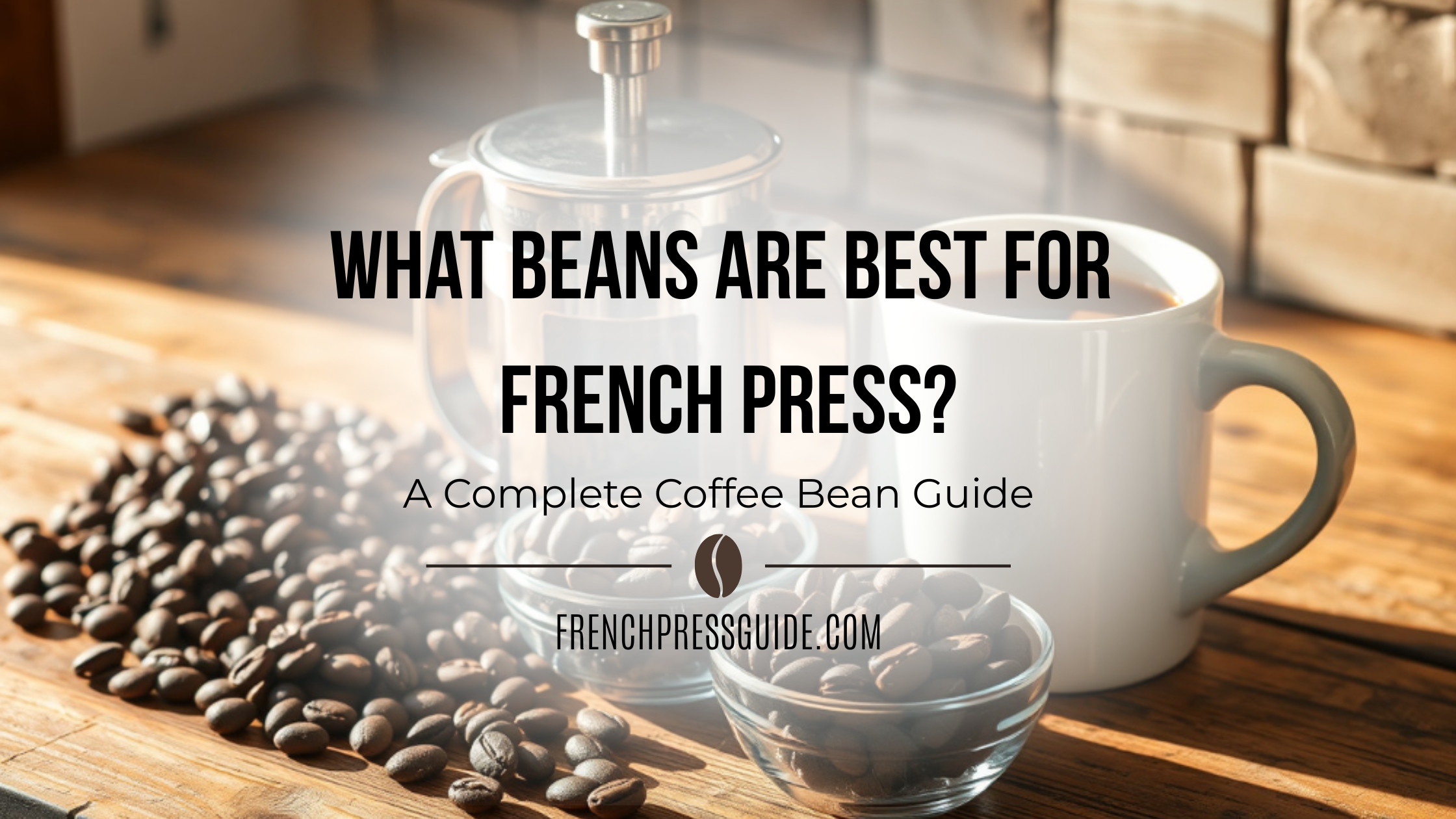
Choosing what beans are best for French press can have a major impact on the flavor, aroma, and body of your coffee.
While a French press can brew almost any coffee bean, selecting the right roast and using freshly ground beans will help you achieve a richer and more balanced cup.
Whether you’re new to French press brewing or looking to improve your coffee routine, understanding how different beans and grind sizes affect extraction can help you make better brewing decisions.
What kind of beans do you use in a French press?
A French press works well with both Arabica and Robusta coffee beans, although many coffee enthusiasts prefer high-quality Arabica beans because of their smoother flavor and more complex aroma.
In terms of roast level, medium and dark roasts are often the most popular choices for French press brewing.
These roasts produce rich, full-bodied coffee with notes of chocolate, caramel, nuts, or cocoa that pair well with the immersion brewing method.
Whenever possible, buy whole beans and grind them just before brewing to preserve freshness and maximize flavor.
What bean grind is best for French press?
A coarse grind is the ideal grind size for French press coffee. The grounds should resemble coarse sea salt, allowing water to flow evenly around each particle during the brewing process.
Using a coarse grind helps reduce sediment, prevents the filter from clogging, and produces a smoother, more balanced cup. Fine coffee grounds can over-extract quickly and may pass through the metal filter, resulting in bitterness and unwanted grit.
For the best results:
- Use a coarse grind.
- Grind beans immediately before brewing.
- Choose a burr grinder for consistent particle size.
- Avoid espresso or finely ground coffee.
Can you use regular coffee beans in a French press?
Yes. Regular whole coffee beans work perfectly in a French press as long as they are ground to the proper coarse consistency before brewing.
The brewing method doesn’t require special coffee beans. Instead, the quality of your coffee depends on factors such as bean freshness, roast level, grind size, water temperature, and brewing time.
If you’re purchasing pre-ground coffee, look for one specifically labeled for French press or coarse brewing.
Which coffee causes the least acidity?
If you prefer a smoother cup or have a sensitive stomach, certain coffees may be perceived as less acidic than others.
Generally, dark roast coffee tends to taste less acidic than light roast coffee because longer roasting reduces perceived acidity.
Coffee beans from regions such as Brazil and Sumatra are also often associated with chocolatey, nutty flavor profiles and lower perceived acidity.
Cold brew prepared with a French press is another popular option, as the cold extraction process often produces a smoother and less acidic cup compared to traditional hot brewing.
Conclusion
The best beans for a French press ultimately depend on your personal taste, but freshly roasted whole beans paired with a coarse grind consistently produce the best results.
Medium and dark roasts are popular choices because they deliver the rich, full-bodied flavor that French press brewing is known for.
By selecting quality coffee beans, grinding them just before brewing, and following proper brewing techniques, you can enjoy flavorful, aromatic coffee with every cup.
Experimenting with different origins and roast levels is a great way to discover the flavor profile that suits you best.
Read: What Size French Press Should I Get

I’m a passionate coffee enthusiast and the creator behind FrenchPressGuide.com, where I help coffee lovers discover better brewing experiences through honest guides, product reviews, and practical French press tips.