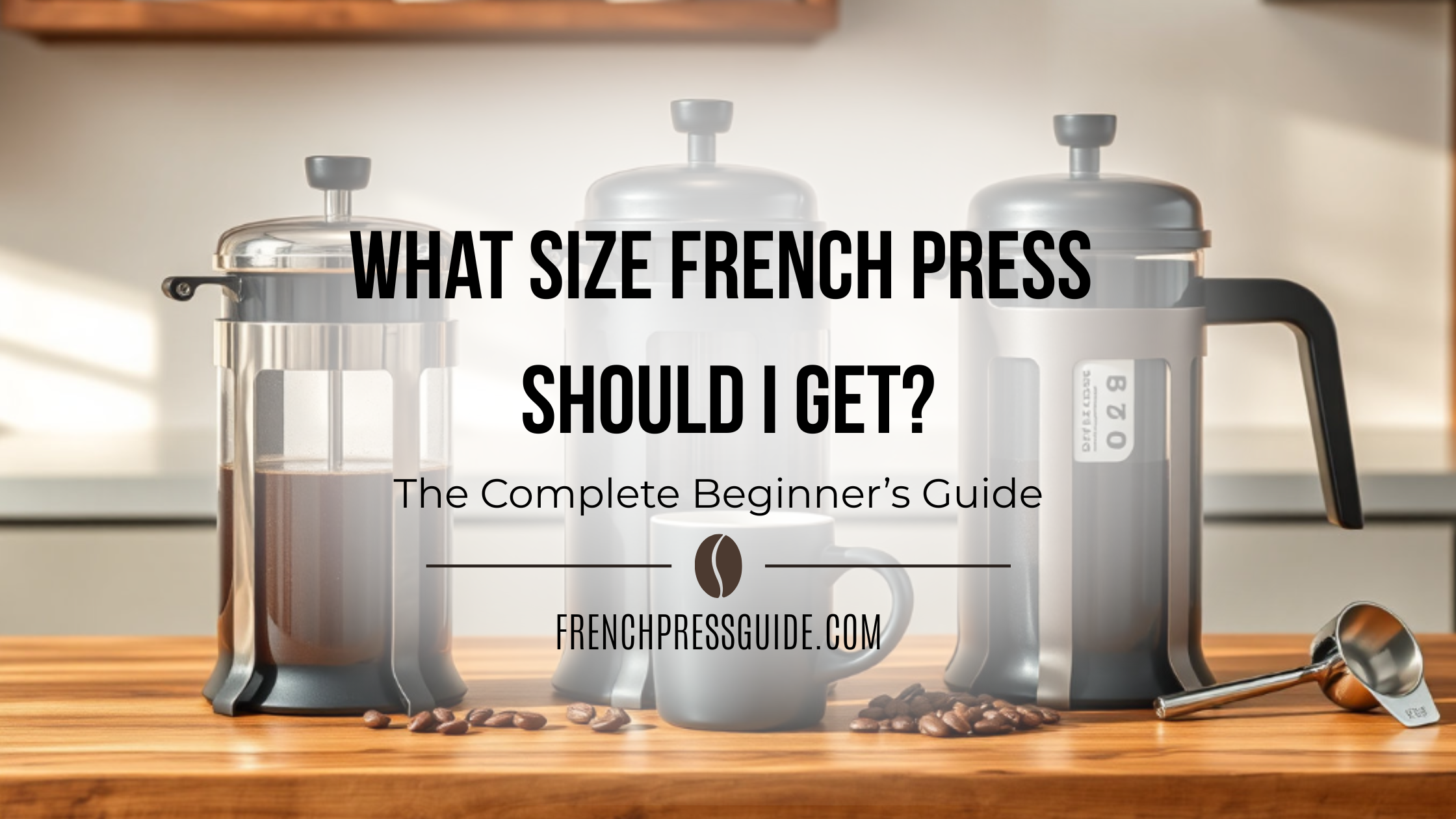
Choosing what size French press should I get depends on how much coffee you drink, how many people you’re brewing for, and where you plan to use it.
While larger French presses can prepare multiple servings at once, smaller models are easier to store, clean, and travel with.
Understanding the different French press sizes will help you avoid buying a brewer that’s either too small or unnecessarily large.
This guide explains how to choose the right capacity based on your daily coffee routine.
What is the best size for a French press?
The best French press size depends on your typical brewing needs.
If you’re the only coffee drinker, a 12 to 20-ounce French press is usually sufficient. For couples or small families, a 34-ounce (1-liter) model is one of the most popular choices because it can brew several cups at once.
Larger households or people who frequently entertain guests may prefer a 50-ounce or larger French press.
Here’s a general guideline:
| French Press Size | Best For |
|---|---|
| 12–20 oz | Single person or occasional coffee drinker |
| 21–34 oz | Two to four people or everyday home use |
| 35–50 oz | Families, guests, or multiple servings |
| Over 50 oz | Offices, gatherings, or large groups |
Can French press coffee raise cholesterol?
French press coffee contains natural coffee oils because its metal filter does not remove compounds such as cafestol and kahweol the way paper filters do.
Research suggests that drinking large amounts of unfiltered coffee may increase LDL (“bad”) cholesterol in some individuals.
However, the overall effect depends on factors such as your overall diet, genetics, and how much coffee you consume. If you have cholesterol concerns, it’s best to seek guidance from a healthcare professional.
How to choose the right French press?
Selecting the right French press involves more than choosing the correct size. Consider these important factors before making a purchase:
- Choose a capacity that matches the number of people you brew for.
- Decide between borosilicate glass and stainless steel construction.
- Look for a high-quality reusable filtration system.
- Consider heat retention if you enjoy sipping coffee over time.
- Check how easy the French press is to clean and maintain.
- If you travel often, choose a durable and portable model.
Focusing on these features will help you find a French press that suits your lifestyle and brewing preferences.
What are the disadvantages of a French press coffee maker?
Although a French press produces rich and flavorful coffee, it does have a few limitations.
Since it’s a manual brewing method, you’ll need to heat water separately and monitor brewing time yourself. Glass models also require careful handling because they’re more fragile than stainless steel alternatives.
Other potential disadvantages include:
- Some sediment may remain in the cup.
- Coffee can become bitter if left in the French press too long.
- Requires more hands-on preparation than automatic coffee makers.
- Needs cleaning after every use to maintain flavor quality.
Conclusion
Choosing the right French press size depends on your daily coffee habits and the number of people you typically brew for.
Smaller models are ideal for individuals and travelers, while medium and larger capacities are better suited for families, offices, and entertaining guests.
By considering capacity alongside material, filtration, durability, and ease of cleaning, you can confidently select a French press that fits your needs.
Investing in the right size ensures a better brewing experience and helps you enjoy fresh, flavorful coffee every time.
Read: What Is the Best Water Temperature for French Press

I’m a passionate coffee enthusiast and the creator behind FrenchPressGuide.com, where I help coffee lovers discover better brewing experiences through honest guides, product reviews, and practical French press tips.